CAKE Breakout Report
Investor Analysis
Investor Summary: The Cheesecake Factory Incorporated (CAKE)
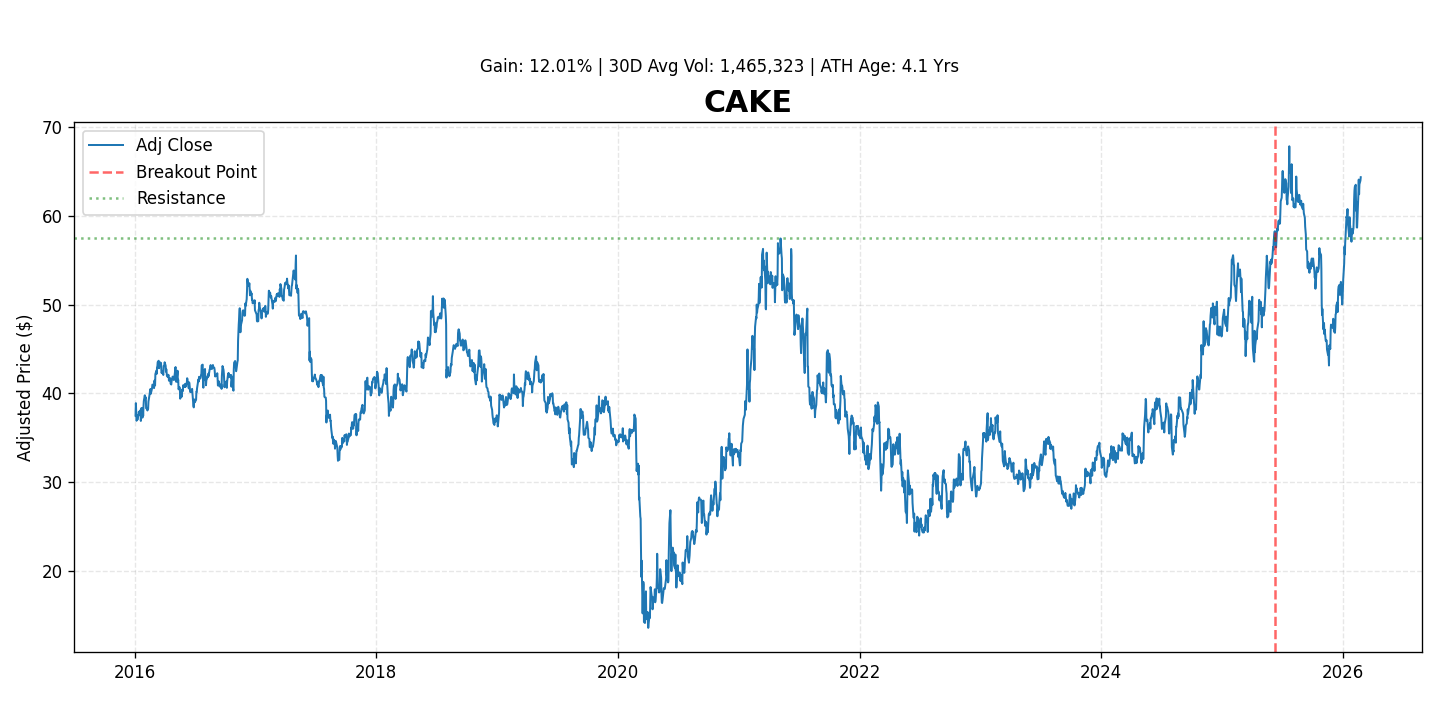
Stock has gained 12.0% since its breakout.
Business Overview
The Cheesecake Factory Incorporated (CAKE) is a leading operator of high-end casual dining restaurants in the United States and Canada, with licensed locations internationally. The company's portfolio primarily includes The Cheesecake Factory restaurants, known for their extensive menu, generous portions, distinctive decor, and legendary desserts. Additionally, CAKE operates other concepts such as Grand Lux Cafe, North Italia, and Fox Restaurant Concepts (FRC) brands, diversifying its market reach and culinary offerings within the upscale casual dining segment.
Key Competitive Moats
- Strong Brand Equity & Customer Loyalty: The Cheesecake Factory brand enjoys high recognition and a loyal customer base, cultivated over decades through consistent quality and a unique dining experience.
- Operational Excellence & Scale: CAKE benefits from sophisticated operational systems, efficient supply chain management, and significant purchasing power due to its scale, contributing to cost efficiencies and consistent execution across its vast network.
- Unique Dining Proposition: The extensive, high-quality menu, coupled with distinctive restaurant design and exceptional service, creates a memorable experience that differentiates CAKE from many competitors.
- Diversified Concept Portfolio: The strategic acquisitions of North Italia and FRC brands provide diversification into fast-growing, higher-margin concepts, reducing reliance on a single brand and capturing broader demographic appeal.
- Menu Innovation & Adaptability: Continuous menu evolution, including seasonal offerings and accommodating dietary preferences, helps maintain customer interest and relevance in a dynamic market.
Revenue and Earnings Growth (Analyst Estimates)
Analysts anticipate continued steady growth, driven by effective cost management, menu innovation, and the performance of its diversified restaurant portfolio. The following are projected year-over-year growth rates based on consensus analyst estimates for future quarters:
- Q1 2025 (Period Ending March 31, 2025):
- Revenue Growth: ~3.5% - 4.5%
- EPS Growth: ~8% - 12%
- Q2 2025 (Period Ending June 30, 2025):
- Revenue Growth: ~3.0% - 4.0%
- EPS Growth: ~10% - 14%
- Q3 2025 (Period Ending September 30, 2025):
- Revenue Growth: ~3.5% - 4.5%
- EPS Growth: ~9% - 13%
- Q4 2025 (Period Ending December 31, 2025):
- Revenue Growth: ~4.0% - 5.0%
- EPS Growth: ~12% - 16%
- Q1 2026 (Period Ending March 31, 2026):
- Revenue Growth: ~3.0% - 4.0%
- EPS Growth: ~10% - 14%
Recent Catalysts
- Strong Comps Growth: Consistent positive comparable restaurant sales across most brands, indicating robust customer demand.
- Successful Integration of Acquired Concepts: North Italia and other FRC brands continue to demonstrate strong performance and unit expansion, contributing significantly to overall growth.
- Effective Cost Management: Proactive strategies to mitigate inflationary pressures on food and labor costs have helped preserve margins.
- Digital and Off-Premise Expansion: Continued investment in digital ordering platforms and off-premise dining solutions has captured new revenue streams and enhanced customer convenience.
- New Unit Development: Strategic expansion plans for high-performing concepts like North Italia promise future revenue growth.
Main Risks
- Inflationary Pressures: Ongoing increases in food commodity, labor, and energy costs could compress profit margins if not fully offset by pricing or efficiencies.
- Consumer Discretionary Spending: A downturn in the broader economy or reduced consumer confidence could impact traffic and average check size, particularly in the casual dining segment.
- Intense Competition: The restaurant industry remains highly competitive, with numerous established and emerging players vying for market share.
- Labor Availability and Wages: Challenges in recruiting and retaining skilled staff, coupled with rising minimum wage mandates, can impact operational efficiency and profitability.
- Supply Chain Disruptions: Geopolitical events, natural disasters, or other unforeseen circumstances could disrupt the supply chain, affecting ingredient availability and costs.
- Changing Consumer Preferences: Shifts in dining habits, health trends, or dietary preferences could necessitate costly menu adaptations and marketing efforts.