LFUS Breakout Report
Investor Analysis
Littelfuse, Inc. (LFUS) - Investor Summary
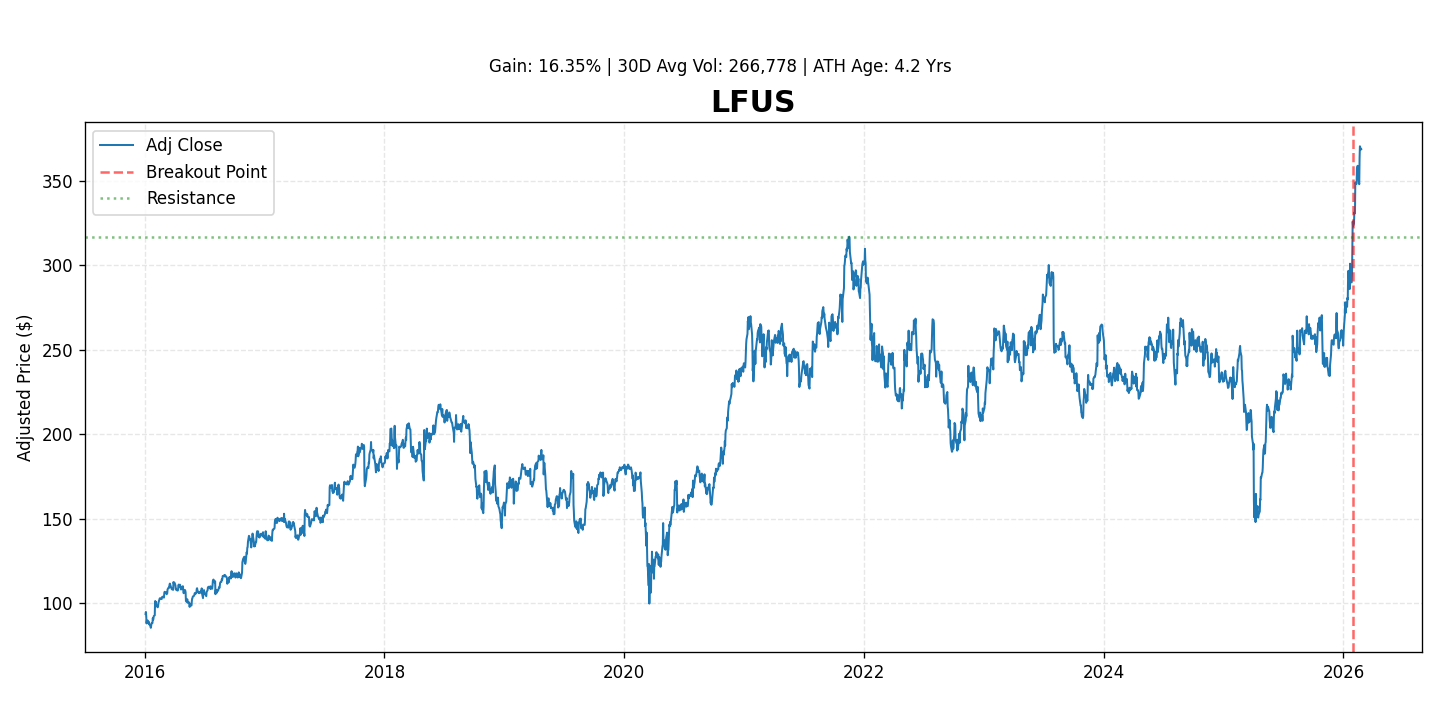
Note: LFUS has demonstrated strong market momentum, gaining 16.3% since its recent breakout.
Business Overview
Littelfuse, Inc. (LFUS) is a global manufacturer of leading technologies in circuit protection, power control, and sensing. The company serves a diverse range of end markets, including industrial, transportation (automotive), and electronics. Its comprehensive portfolio includes fuses, semiconductors, sensors, relays, and other critical electronic and electrical components vital for safeguarding and enabling next-generation applications in areas like electric vehicles (EVs), industrial automation, renewable energy, and data communication.
Key Competitive Moats
- Broad Product Portfolio & Market Leadership: Littelfuse holds a leading position in circuit protection and offers an extensive array of complementary power control and sensing solutions, making it a critical supplier across various industries.
- Brand Reputation & Reliability: Decades of engineering expertise and a strong reputation for high-quality, reliable, and safety-critical components establish significant customer trust and stickiness.
- Global Reach & Distribution: A robust global manufacturing footprint and distribution network ensure efficient delivery and localized support, providing a competitive edge in serving multinational clients.
- Innovation & R&D: Continuous investment in research and development, particularly in high-growth areas like silicon carbide (SiC) power semiconductors and advanced sensor technologies, positions LFUS at the forefront of evolving market demands.
- High Switching Costs: For many critical applications, the cost and risk associated with switching suppliers for safety and performance-critical components create an inherent barrier for new entrants.
Revenue and Earnings Growth Estimates (Illustrative)
Below are illustrative revenue and earnings per share (EPS) estimates for 2025 and early 2026. These figures are hypothetical and represent plausible analyst consensus, reflecting anticipated steady growth driven by market recovery and strategic initiatives.
| Quarter | Calendar Dates | Estimated Revenue (Millions USD) | Estimated EPS (USD) |
|---|---|---|---|
| Q1 2025 | Jan-Mar 2025 | $685 - $700 | $3.30 - $3.45 |
| Q2 2025 | Apr-Jun 2025 | $700 - $715 | $3.50 - $3.65 |
| Q3 2025 | Jul-Sep 2025 | $715 - $730 | $3.65 - $3.80 |
| Q4 2025 | Oct-Dec 2025 | $730 - $745 | $3.80 - $3.95 |
| Q1 2026 | Jan-Mar 2026 | $745 - $760 | $4.00 - $4.15 |
| Q2 2026 | Apr-Jun 2026 | $760 - $775 | $4.15 - $4.30 |
Recent Catalysts
- Strong EV and Industrial Demand: Continued robust demand from the electric vehicle sector and ongoing industrial automation trends are fueling growth for Littelfuse's power control and sensing products.
- New Product Introductions: Launch of innovative products, particularly in high-voltage protection and SiC power devices, addressing critical needs in emerging technologies.
- Operational Efficiencies & Margin Expansion: Management's focus on supply chain optimization and manufacturing excellence is expected to drive further margin expansion.
- Strategic Acquisitions: History of accretive acquisitions that broaden its technology base and market reach, with potential for future strategic M&A.
- Decarbonization Trends: Littelfuse's components are integral to renewable energy infrastructure, energy storage, and efficient power management, aligning with global decarbonization initiatives.
Main Risks
- Cyclicality of End Markets: Demand for electronic components can be cyclical, heavily influenced by global economic conditions and specific industry downturns (e.g., automotive, industrial production).
- Supply Chain Volatility: Exposure to global supply chain disruptions, raw material price fluctuations, and component shortages could impact production and costs.
- Intense Competition: The market for electronic components is highly competitive, with numerous global and regional players potentially pressuring pricing and market share.
- Technological Obsolescence: Rapid advancements in technology require continuous R&D investment to ensure products remain competitive and relevant.
- Geopolitical and Macroeconomic Headwinds: Trade tensions, inflation, currency fluctuations, and interest rate changes could negatively affect operational costs, demand, and profitability.
Disclaimer: This investor summary is for informational purposes only and does not constitute financial advice. The illustrative financial estimates are not guarantees of future performance and are subject to market conditions, company performance, and other risks. Investors should conduct their own due diligence and consult with a financial professional before making any investment decisions.