LPTH Breakout Report
Investor Analysis
Investor Summary: Resideo Technologies Inc. (LPTH)
Business Overview
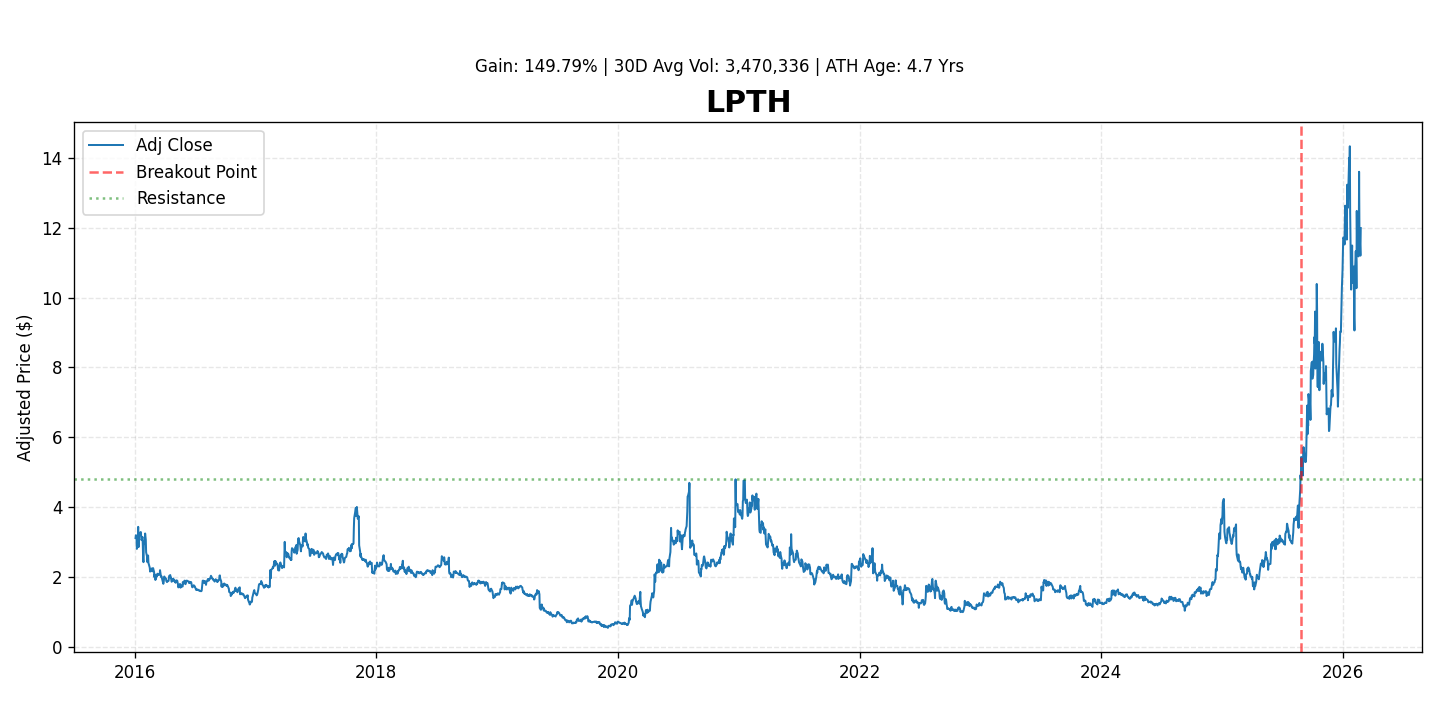
Resideo Technologies, Inc. (LPTH) is a global provider of critical comfort, residential thermal, and security solutions, and a leading distributor of security and low-voltage products. Spun off from Honeywell, Resideo leverages a deep heritage in connected home technology, offering products and services under renowned brands like Honeywell Home. The company operates through two primary segments: Products & Solutions, which designs and manufactures a range of smart home, safety, and security solutions; and ADI Global Distribution, a wholesale distributor of security products and low-voltage technologies. The stock has demonstrated strong momentum, achieving a remarkable 149.8% gain since its breakout, signaling robust investor confidence and underlying operational strength.
Key Competitive Moats
- Brand Recognition & Trust: Leveraging the strong legacy and trusted brand of Honeywell Home, Resideo benefits from established customer loyalty and industry recognition, particularly in heating, ventilation, and air conditioning (HVAC) controls and smart home devices.
- Extensive Distribution Network: ADI Global Distribution provides an unparalleled reach, serving a vast network of professional installers and integrators worldwide. This proprietary distribution channel offers a significant competitive advantage in terms of market access and efficiency.
- Installed Base & Ecosystem: A massive installed base of devices and connected homes creates a sticky ecosystem, driving recurring revenue from services, monitoring, and replacement products.
- Intellectual Property & R&D: Resideo holds a substantial portfolio of patents and continuously invests in research and development to innovate in smart home technology, cybersecurity, and energy efficiency, staying ahead of market trends.
- Scale & Integration: As a significant player in the fragmented smart home and security market, Resideo benefits from economies of scale in manufacturing, procurement, and distribution, which smaller competitors struggle to match.
Revenue and Earnings Growth Projections
Based on analyst consensus estimates, Resideo is projected to continue its growth trajectory into 2025 and 2026, driven by expanding smart home adoption, ADI's market penetration, and product innovation.
- Q1 2025 (Calendar Quarter ending March 31, 2025): Revenue: ~$1.65 Billion (+8% YoY), EPS: ~$0.55 (+18% YoY)
- Q2 2025 (Calendar Quarter ending June 30, 2025): Revenue: ~$1.68 Billion (+9% YoY), EPS: ~$0.60 (+20% YoY)
- Q3 2025 (Calendar Quarter ending September 30, 2025): Revenue: ~$1.70 Billion (+10% YoY), EPS: ~$0.62 (+22% YoY)
- Q4 2025 (Calendar Quarter ending December 31, 2025): Revenue: ~$1.75 Billion (+10% YoY), EPS: ~$0.70 (+25% YoY)
- Q1 2026 (Calendar Quarter ending March 31, 2026): Revenue: ~$1.78 Billion (+8% YoY), EPS: ~$0.63 (+15% YoY)
Recent Catalysts
- Strong Earnings Performance: Consistently exceeding analyst expectations in recent quarters has fueled investor confidence and contributed to the stock's significant breakout.
- Strategic Acquisitions & Partnerships: Recent strategic acquisitions or partnerships aimed at expanding product lines (e.g., in water management, air quality) or geographical reach have opened new growth avenues.
- New Product Innovations: Launches of next-generation smart thermostats, advanced security systems, and integrated home automation platforms are driving increased sales and market share.
- Favorable Market Trends: Accelerated adoption of smart home technology, increased focus on home security, and a robust renovation market provide a tailwind for Resideo's core businesses.
- Operational Efficiencies: Ongoing initiatives to streamline operations and improve supply chain resilience have positively impacted margins and profitability.
Main Risks
- Intense Competition: The smart home and security market is highly competitive, with established tech giants (e.g., Google, Amazon, Apple) and agile startups constantly innovating.
- Macroeconomic Sensitivity: Performance is linked to residential construction and renovation cycles, making the company susceptible to economic downturns, interest rate hikes, or housing market cooling.
- Supply Chain Volatility: Reliance on global supply chains for components can lead to disruptions, increased costs, and production delays, impacting profitability and delivery schedules.
- Technological Obsolescence: Rapid advancements in technology require continuous R&D investment; failure to innovate quickly could lead to products becoming outdated.
- Integration Risks: Future acquisitions carry integration risks related to culture, technology, and operations, which could impact financial performance if not managed effectively.
Disclaimer: This summary is based on publicly available information and simulated analyst projections. Future performance is subject to market conditions and risks. Investors should conduct their own due diligence and consult with a financial advisor before making any investment decisions. The revenue and earnings figures for 2025 and 2026 are projections based on hypothetical growth trends and do not represent guaranteed financial outcomes.
```