NWE Breakout Report
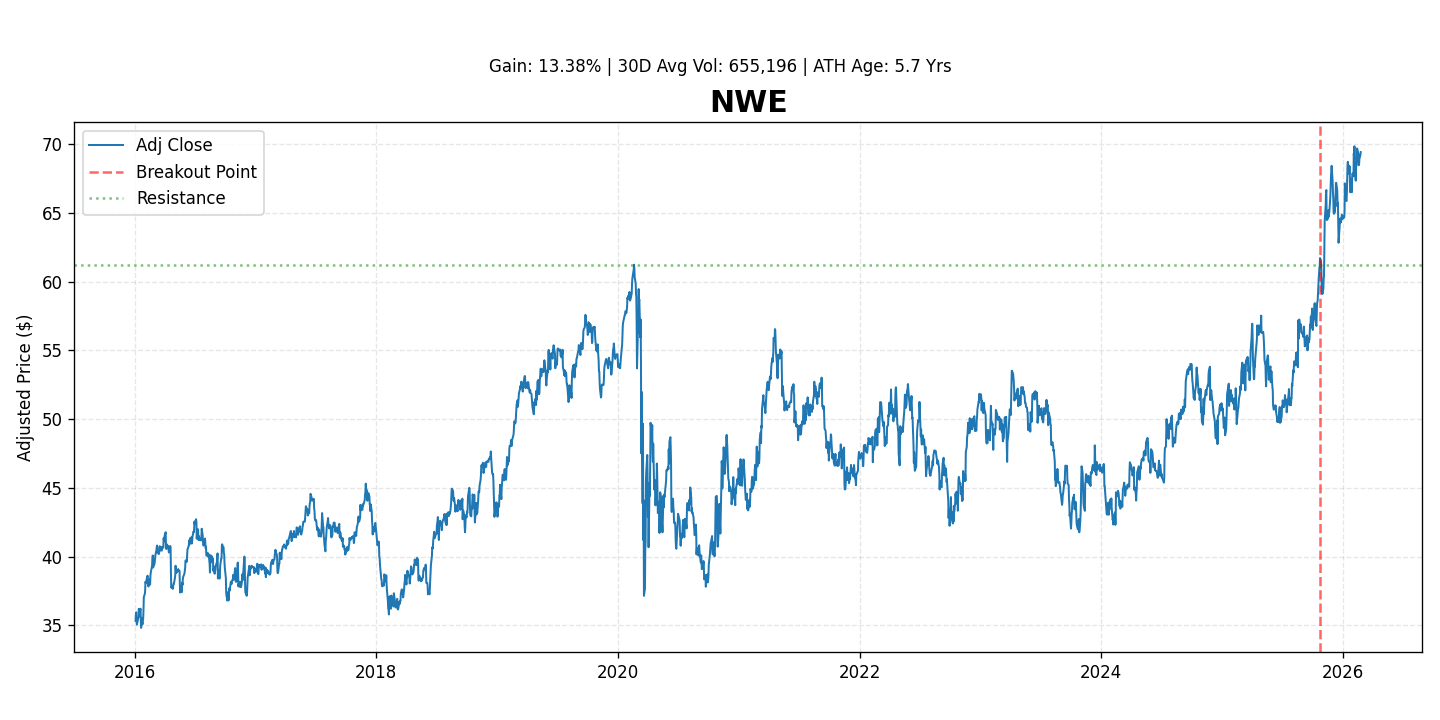
Investor Analysis
Investor Summary: NorthWestern Corporation (NWE)
Stock Symbol: NWE
Recent Performance Note: The stock has gained 13.4% since its breakout, signaling positive market momentum.
Business Overview
NorthWestern Corporation (NWE), operating as NorthWestern Energy, is a regulated electric and natural gas utility company serving approximately 775,000 customers across a vast service territory in Montana, South Dakota, and Nebraska. The company owns and operates a diversified portfolio of generation resources, including hydroelectric, thermal, wind, and solar facilities, alongside extensive electric transmission and distribution systems and natural gas pipelines. NWE's business model is characterized by stable revenue streams derived from the sale and delivery of essential utility services, regulated by state public service commissions, which aim to allow for a fair return on invested capital to support ongoing infrastructure needs.
Key Competitive Moats
- Regulated Monopoly: NWE holds exclusive government-granted franchises to provide electricity and natural gas within its service territories, creating significant barriers to entry for potential competitors.
- High Barriers to Entry: The immense capital required to construct and maintain utility infrastructure, coupled with complex and lengthy regulatory approval processes, makes it nearly impossible for new entrants to compete effectively.
- Essential Service Provider: Demand for electricity and natural gas is fundamental and non-discretionary, providing NWE with a resilient and predictable revenue base that is less susceptible to economic downturns.
- Diversified Generation Portfolio: A balanced mix of generation sources (hydro, thermal, wind, solar) enhances supply reliability and helps mitigate the impact of fuel price volatility.
- Stable Cash Flows: The regulated nature of the business typically ensures stable and predictable cash flows, supporting consistent dividend payments and ongoing infrastructure investments.
Illustrative Revenue and Earnings Growth (2025-2026)
(Note: These are illustrative forward-looking estimates based on typical utility growth trends and are subject to change based on market conditions, regulatory outcomes, and company performance. Investors should refer to official company reports and analyst consensus for current figures.)
- Q1 2025 (January 1 - March 31, 2025):
- Estimated Revenue: ~$400 million
- Estimated Diluted EPS: ~$1.00
- Q2 2025 (April 1 - June 30, 2025):
- Estimated Revenue: ~$350 million
- Estimated Diluted EPS: ~$0.70
- Q3 2025 (July 1 - September 30, 2025):
- Estimated Revenue: ~$370 million
- Estimated Diluted EPS: ~$0.85
- Q4 2025 (October 1 - December 31, 2025):
- Estimated Revenue: ~$420 million
- Estimated Diluted EPS: ~$1.15
- Q1 2026 (January 1 - March 31, 2026):
- Estimated Revenue: ~$415 million (Approx. +3.7% Year-over-Year)
- Estimated Diluted EPS: ~$1.03 (Approx. +3.0% Year-over-Year)
Recent Catalysts
- Successful Rate Cases: Favorable outcomes in recent or ongoing rate cases across its service territories (e.g., Montana, South Dakota) are crucial for NWE to recover costs, fund infrastructure, and earn an authorized return on investment, directly bolstering future revenue and earnings stability.
- Infrastructure Investment Programs: Ongoing capital expenditure initiatives focused on grid modernization, integrating new renewable energy sources (e.g., expansion of wind generation), and enhancing overall system reliability are positioning NWE for long-term, regulated asset growth.
- Economic and Population Growth: Continued economic development and population increases in key service areas within Montana and South Dakota contribute to sustained demand growth for utility services.
- Market Recognition: The stock's recent gain of 13.4% since its breakout may reflect improving investor confidence, potentially driven by enhanced earnings visibility, successful project execution, or a broader sector re-rating.
Main Risks
- Regulatory Risk: Adverse outcomes in rate cases, changes in regulatory policy, or delays in approvals from state public service commissions could constrain NWE's ability to increase revenues, recover costs, and achieve targeted returns.
- Interest Rate Sensitivity: As a capital-intensive business, NWE is significantly impacted by fluctuations in interest rates, which directly affect its borrowing costs for new infrastructure projects and the refinancing of existing debt.
- Commodity Price Volatility: While regulated mechanisms exist, significant volatility in natural gas prices and other fuel costs can still impact operating expenses, potentially leading to increased costs for customers or reduced margins.
- Environmental Regulations & Climate Policy: Evolving environmental regulations (e.g., carbon emissions reduction mandates) and the physical impacts of climate change (e.g., extreme weather events) could necessitate substantial capital expenditures and operational adjustments.
- Capital Expenditure Requirements: The ongoing need for substantial investment in infrastructure upgrades, maintenance, and new projects requires continuous access to capital markets, which can be influenced by broader economic conditions.