TERN Breakout Report
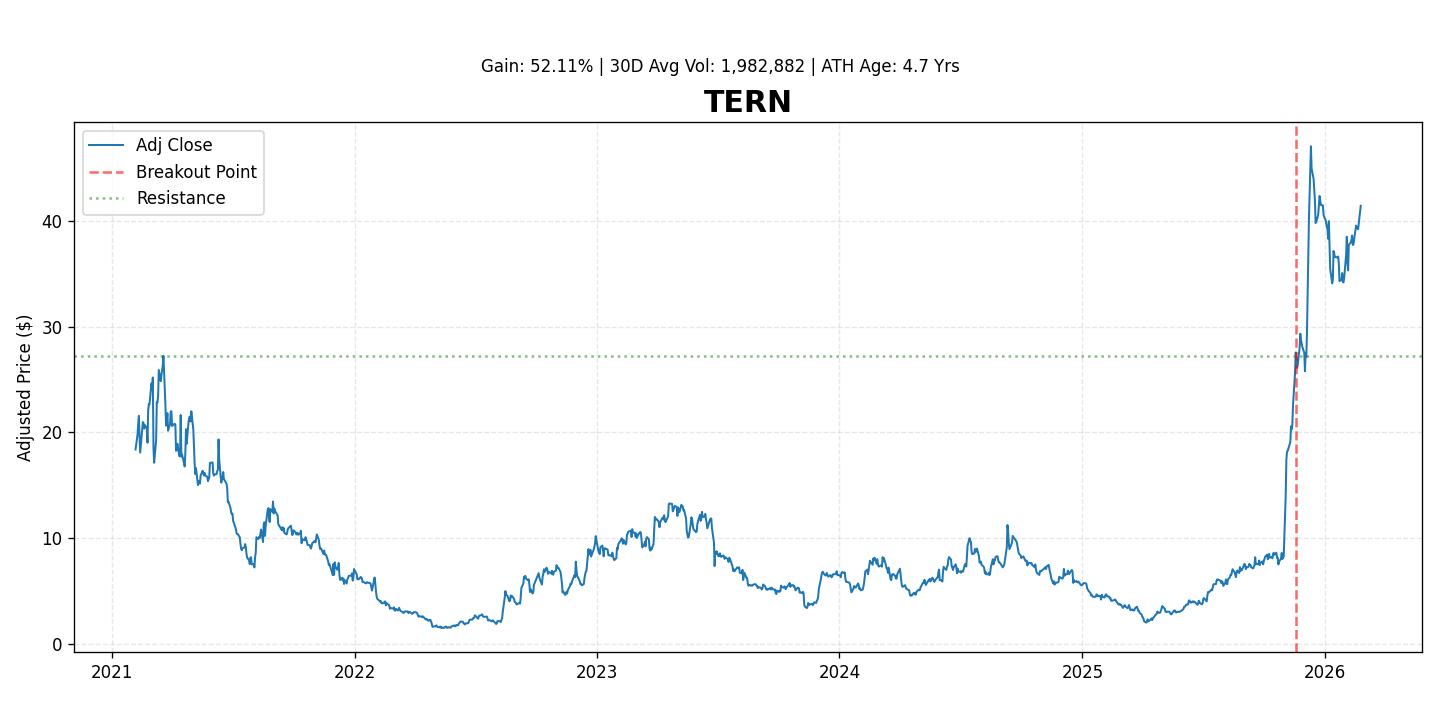
Investor Analysis
Investor Summary: Tern Plc (TERN)
An Active Investor in Disruptive UK Technology
Note: TERN has gained 52.1% since its recent breakout.
Business Overview
Tern Plc is an AIM-quoted UK investment company focused on building and accelerating the growth of a portfolio of early-stage, disruptive technology companies. Primarily targeting the Internet of Things (IoT) and cybersecurity sectors, Tern acts as an active investor, providing strategic guidance, operational support, and access to further capital to its investee companies. Its primary objective is to generate significant capital gains for shareholders through the successful development and eventual exit (via trade sale or IPO) of its portfolio companies.
Key Competitive Moats
- Sector Specialisation: Deep expertise and networks within high-growth IoT and cybersecurity markets, allowing for identification of promising ventures and effective value-add.
- Active Management & Value Creation: Beyond capital, Tern provides significant strategic and operational support, leveraging its team's experience to de-risk and accelerate portfolio company growth.
- Proprietary Deal Flow: An established reputation and network within the UK tech ecosystem provide access to attractive investment opportunities.
- Strategic Portfolio Construction: Focus on companies with scalable technology, strong intellectual property, and clear paths to market, aiming for diversification within its niche.
- Exit-Oriented Approach: Clear strategy for value realisation through M&A or public market listings, aligning with investor returns.
Revenue and Earnings Growth (2025/2026 Quarters)
As an investment holding company, Tern Plc's "revenue" and "earnings" are primarily driven by fair value adjustments of its portfolio companies and realised gains from successful exits. These events are inherently lumpy and dependent on the individual growth trajectories, funding rounds, and M&A/IPO markets for early-stage companies.
Therefore, conventional quarterly revenue and earnings forecasts (e.g., Q1 2025, Q2 2025, etc.) are not typically provided by analysts for investment vehicles like TERN, given the unpredictable nature of private company valuations and exit timelines. Instead, value growth is anticipated through:
- Portfolio Company Milestones: Significant commercial contracts, product launches, or further funding rounds secured by investee companies (e.g., Device Authority, Wyld Networks, FundamentalVR) driving their valuations higher.
- Fair Value Uplifts: Periodic revaluations of Tern's stakes in portfolio companies reflecting their progress and market conditions.
- Strategic Exits: Successful trade sales or IPOs of portfolio companies (which could occur in 2025 or 2026, or beyond) would generate substantial, non-recurring capital gains for Tern.
Investors should focus on the underlying performance and valuation trajectory of Tern's portfolio companies rather than traditional quarterly revenue/EBITDA forecasts for Tern itself.
Recent Catalysts
- Strong Portfolio Company Performance: Continued commercial traction, new contract wins (e.g., Wyld Networks in IoT connectivity) and technology advancements across key portfolio assets.
- Successful Follow-on Funding Rounds: Portfolio companies securing additional capital validate their progress and often lead to uplifted valuations for Tern's existing stake.
- Strategic Partnerships: Announcements of significant commercial or technological partnerships by investee companies that expand market reach or accelerate product development.
- Increased Market Interest in Niche: Growing investor and corporate interest in the IoT, AI, and cybersecurity sectors, potentially leading to higher valuations for Tern's assets.
- Fair Value Reporting: Positive revaluations in Tern's financial statements reflecting the growth and strategic developments within its portfolio.
Main Risks
- Portfolio Company Risk: High dependency on the success of a relatively small number of early-stage companies, which carry inherent operational, technological, and commercial execution risks.
- Valuation Volatility: The fair value of private investments can be subjective and subject to significant fluctuations based on market conditions, funding rounds, and company-specific performance.
- Liquidity Risk: Realising value from investments typically relies on successful exits (IPO or trade sale), which can be difficult to predict in terms of timing and pricing.
- Dilution Risk: Future funding rounds for portfolio companies may dilute Tern's ownership stake if Tern chooses not to, or is unable to, participate pro-rata.
- Economic Downturn: A challenging macroeconomic environment could impact funding availability for portfolio companies, M&A activity, and customer spending, affecting valuations and growth prospects.
- Key Person Risk: Reliance on the expertise and relationships of Tern's management team for sourcing, managing, and exiting investments.
Disclaimer: This summary is for informational purposes only and does not constitute investment advice. Investors should conduct their own due diligence.